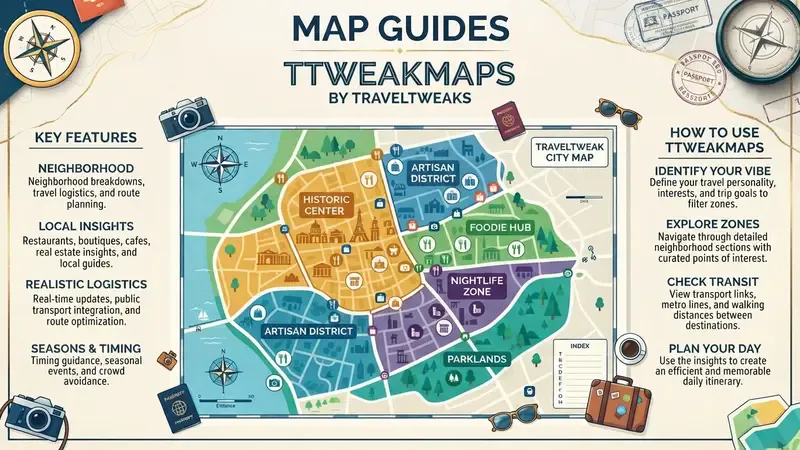
Map Guides TTweakMaps by TravelTweaks can be a useful concept for travelers who want to organize destinations, routes, attractions, and travel plans in a clear and practical way. Maps are an important part of modern travel because they help visitors understand unfamiliar locations, estimate distances, identify nearby places, and plan daily activities. A well-organized travel map can also make it easier to discover attractions that may otherwise be overlooked.
Travelers can use map guides to prepare before a trip and navigate more confidently while exploring a destination. Travelers can organize information such as landmarks, restaurants, hotels, transportation points, scenic areas, and activity locations around a map to create a more convenient travel reference.
This guide explains the idea behind Map Guides TTweakMaps by TravelTweaks, how travelers can use map-based information, and what features can make a travel map more helpful. It also covers planning tips, practical benefits, common mistakes, and future possibilities for digital travel guides.
Table of Contents
- What Are Map Guides TTweakMaps by TravelTweaks?
- Why Map Guides Are Useful for Travelers
- Key Information to Include on a Travel Map
- How to Use Map Guides for Trip Planning
- Benefits of Map-Based Travel Information
- Tips for Creating a Better Travel Route
- Common Map Planning Mistakes
- Future of Digital Travel Maps
- Conclusion
What Are Map Guides TTweakMaps by TravelTweaks?
Map Guides TTweakMaps by TravelTweaks refers to the idea of using organized map-based information to make travel planning easier. Instead of relying only on long descriptions, travelers can use maps to understand where attractions, services, transportation options, and other important locations are positioned.
A useful travel map can turn complicated destination information into something easier to understand. Travelers can identify places they want to visit and organize them by distance, location, opening times, or personal interests.
Why Map Guides Are Useful for Travelers
Maps provide a visual understanding of a destination. This is especially helpful when visiting a large city or an unfamiliar region.
Some important benefits include:
| Benefit | How It Helps |
|---|---|
| Better Navigation | Helps travelers understand routes and locations. |
| Time Management | Makes it easier to group nearby attractions together. |
| Trip Organization | Provides a visual overview of planned activities. |
| Location Awareness | Shows where hotels, attractions, restaurants, and transport are located. |
| Flexible Planning | Allows travelers to adjust routes when plans change. |
A map can also help travelers avoid unnecessary backtracking. By identifying nearby attractions before leaving a hotel, visitors can create a more efficient daily itinerary.
Key Information to Include on a Travel Map
A useful map guide should provide information that supports practical travel decisions. Depending on the destination, this may include:
Attractions
You can mark popular attractions, museums, historic sites, parks, beaches, viewpoints, and entertainment venues on a map.
Accommodation
Hotels, hostels, vacation rentals, and other accommodation options help travelers understand how close their lodging is to key locations.
Transportation
Train stations, bus stops, airports, parking areas, ferry terminals, and major transportation connections are useful map points.
Food and Dining
Restaurants, cafés, markets, and local food areas can make a map more valuable for travelers who want to plan meals around their sightseeing routes.
Outdoor Locations
Include hiking trails, beaches, parks, lakes, scenic viewpoints, and recreational areas for travelers interested in outdoor activities.
How to Use Map Guides for Trip Planning
Travelers can use a map guide at several stages of a trip.
1. Research the Destination
Start by identifying the main attractions and areas you want to explore. Knowing their locations gives you a better idea of how much time you may need.
2. Choose a Convenient Base
Look at the map before selecting accommodation. A centrally located hotel may make it easier to reach several attractions.
3. Group Nearby Places
Group nearby attractions into the same day’s itinerary. This can reduce unnecessary travel between locations.
4. Consider Transportation
Check available transportation routes and travel times. Walking may work in one area, while public transportation or a car may be better in another.
5. Leave Some Flexibility
A good itinerary shouldn’t be so strict that it leaves no room for unexpected discoveries. Leave free time for local experiences, rest, and changes in weather or opening hours.
Benefits of Map-Based Travel Information
Easier Decision-Making
Visual information can make it easier to compare locations and decide what to visit.
Improved Time Planning
Seeing multiple destinations on one map helps travelers estimate how much time they may spend moving between places.
Better Local Exploration
Maps can encourage visitors to explore neighborhoods and nearby attractions instead of visiting only the most famous locations.
Convenient Reference
A well-organized map can serve as a quick reference throughout a trip, especially when travelers need to identify nearby services or attractions.
Quick Details
| Detail | Information |
|---|---|
| Main Topic | Map-based travel planning |
| Primary Keyword | Map Guides TTweakMaps by TravelTweaks |
| Main Purpose | Destination and route planning |
| Useful For | Tourists, travelers, and trip planners |
| Important Features | Attractions, routes, transportation, accommodation, and dining |
| Planning Approach | Organize nearby locations and allow flexibility |
| Future Potential | Personalized and interactive digital travel maps |
Tips for Creating a Better Travel Route
When using Map Guides TTweakMaps by TravelTweaks, travelers can improve their planning by following a few simple practices:
- Start with the attractions that matter most to you.
- Check distances between locations before creating a daily schedule.
- Consider opening and closing times.
- Keep transportation options in mind.
- Avoid planning too many activities in one day.
- Add restaurants and rest stops along longer routes.
- Check the map again if weather or transportation conditions change.
- Keep alternative destinations available in case plans change.
The goal should not be to visit the maximum number of places. Instead, a good route should balance sightseeing, transportation, relaxation, and personal interests.
Common Map Planning Mistakes
Even a detailed map can be less useful if you use it incorrectly.
Overloading the Itinerary
Adding too many locations can create a stressful schedule. Select the places that are most relevant to your trip.
Ignoring Travel Time
Two attractions may look close on a map but take longer to reach because of traffic, terrain, transportation connections, or walking routes.
Forgetting Operating Hours
A location may be nearby but unavailable when you arrive. Always verify current hours when possible.
Depending Entirely on One Route
An alternative route can help if transportation changes, roads close, or unexpected delays occur.
Not Checking Updated Information
Travel information can change. Before visiting, check important details such as closures, entrance requirements, transportation schedules, and local conditions.
Future of Digital Travel Maps
Digital travel maps are likely to become increasingly interactive. Future tools may combine maps with personalized recommendations, real-time transportation information, location-based suggestions, weather updates, and artificial intelligence.
Travelers may also create customized maps based on interests such as food, history, shopping, nature, photography, or family activities. Offline features could remain especially important for visitors traveling in areas with limited internet access.
The continued development of digital mapping technology may make travel planning more personalized and easier to manage. Learn more about Technology.
Conclusion
Map Guides TTweakMaps by TravelTweaks represents a practical approach to organizing travel information through maps. By combining destinations, attractions, transportation points, accommodation, dining locations, and useful travel details, map-based guides can help visitors understand a destination before and during their trip.
The most effective approach is to use maps as a planning tool rather than relying on them alone. Travelers should consider distance, timing, transportation, opening hours, and personal interests when creating their routes. With thoughtful planning and updated information, a map guide can make exploring an unfamiliar destination more organized, flexible, and enjoyable.

Pingback: Stay at Home Mom Jobs: Realistic Ways to Earn From Home While Raising Kids -