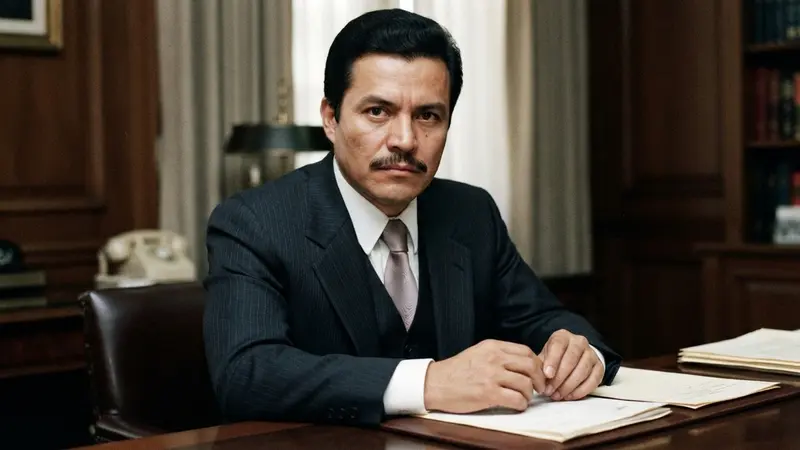
Miguel Ángel Félix Gallardo is a prominent and controversial figure in Mexico’s organized crime history. Born in Sinaloa in 1946, he began his professional life in law enforcement before becoming involved in drug trafficking and eventually emerging as one of the principal founders of the Guadalajara Cartel. During the 1980s, the organization became an important part of Mexico’s drug-trafficking landscape and developed connections with international criminal networks.
Félix Gallardo’s name became particularly associated with the 1985 kidnapping and murder of U.S. Drug Enforcement Administration agent Enrique “Kiki” Camarena and Mexican pilot Alfredo Zavala. He was arrested in 1989 and later received lengthy prison sentences for offenses connected to drug trafficking and the killings. His story has since appeared in documentaries, books, news reports, and television dramas about Mexican organized crime. Examining his life provides insight into the development of major trafficking organizations, the consequences of organized crime, and the complex history of Mexico-U.S. efforts against drug trafficking.
Early Life and Background
Miguel Ángel Félix Gallardo was born on January 8, 1946, in the Culiacán area of Sinaloa. Before entering organized crime, he worked as a police officer and later served as a bodyguard connected to the family of Sinaloa governor Leopoldo Sánchez Celis. His early connections and knowledge of law enforcement reportedly helped him establish relationships that later became important to his criminal activities.
During the 1970s, Félix Gallardo became increasingly involved in drug trafficking. By the 1980s, he had become one of the most prominent figures in Mexico’s organized drug trade.
The Guadalajara Cartel
Félix Gallardo became one of the Guadalajara Cartel’s principal founders, alongside Rafael Caro Quintero and Ernesto Fonseca Carrillo. The organization became one of the most significant drug-trafficking groups operating in Mexico during the 1980s.
The cartel’s activities included trafficking marijuana and cocaine and developing connections with suppliers and criminal networks outside Mexico. Its growing influence contributed to major changes in the structure of organized drug trafficking in Mexico.
Because of his position within the organization, Félix Gallardo became widely known by nicknames including “El Padrino” and “El Jefe de Jefes.” These names later became part of the popular culture surrounding Mexican organized crime.
Connection to Enrique “Kiki” Camarena’s Case
One of the most significant events associated with Félix Gallardo was the 1985 kidnapping and murder of U.S. Drug Enforcement Administration agent Enrique “Kiki” Camarena and Mexican pilot Alfredo Zavala. The case became a major point of tension between Mexican and U.S. authorities.
Authorities arrested Félix Gallardo in Guadalajara on April 8, 1989. Mexican authorities subsequently prosecuted him in connection with the case and other criminal offenses.
In 2017, a Mexican court sentenced him to 37 years in prison for the murders of Camarena and Zavala. His case has continued to attract attention because of later appeals and proceedings related to the conviction. In 2025, a federal court in Jalisco asked Mexico‘s Supreme Court to consider whether to take up his challenge to the 37-year sentence.
Imprisonment and Later Years
Félix Gallardo has spent decades in Mexican prisons. His legal situation has included a separate 40-year sentence connected to drug trafficking, weapons possession, and bribery, in addition to the 37-year sentence related to the Camarena and Zavala case.
His declining health has also been an important part of his later legal proceedings. Recent reports have discussed requests for house arrest and other changes to his detention conditions. As of reporting published in 2025, he remained associated with the Puente Grande prison complex while legal proceedings continued.
Miguel Ángel Félix Gallardo in Popular Culture
Félix Gallardo’s story has remained prominent in documentaries, news reports, books, and television productions about Mexican organized crime. His story is often discussed alongside other major figures from the Guadalajara Cartel because of the organization’s role in the development of later trafficking networks.
However, portrayals of criminal figures can sometimes simplify complicated historical events. For that reason, it is useful to distinguish entertainment portrayals from court records, journalism, and documented historical research.
Historical Significance
The history of Miguel Ángel Félix Gallardo is closely connected to the transformation of organized drug trafficking in Mexico during the late 20th century. The Guadalajara Cartel’s rise, the 1985 Camarena case, and Félix Gallardo‘s subsequent arrest all became important events in the history of Mexican-U.S. cooperation against drug trafficking.
His case also illustrates how criminal organizations can change after the arrest of a central leader. After the Guadalajara Cartel’s decline, several independent trafficking organizations emerged and became influential in different regions of Mexico. For more information, visit terabyte.
Final Thoughts
Miguel Ángel Félix Gallardo remains a controversial and historically significant figure in discussions about Mexican organized crime. His journey from police work to leadership within the Guadalajara Cartel, followed by his 1989 arrest and decades of imprisonment, represents a major chapter in the modern history of drug trafficking.
Understanding his story requires looking beyond popular-culture portrayals and considering documented court proceedings, historical reporting, and the broader social consequences of organized crime. His case continues to receive public attention because of its connection to the Guadalajara Cartel, the murder of Enrique Camarena and Alfredo Zavala, and the long-running legal proceedings surrounding his convictions.
